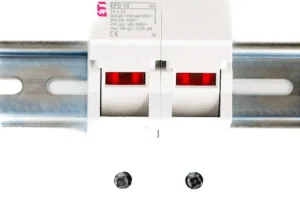
A fuse holder has a pretty simple job, right? Hold the fuse. But a well-designed fuse holder can do two important jobs in a control panel. 1️⃣ Finger Safety Finger-safe fuse holders help protect maintenance personnel from accidental contact with energized components when servicing the panel. That’s a big improvement over exposed fuse terminals. 2️⃣…
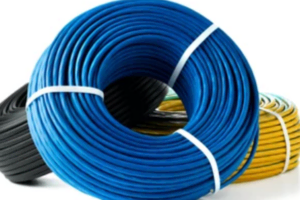
Start Building a Wire Processing Solution 👇💡
What if your wire-processing requirements could be handled as one complete solution instead of sourcing equipment one machine at a time? That’s exactly what we’re helping OEMs and panel builders do at American Electrical, Inc. (AEI) with the assistance of GLW, our manufacturer. Our wire processing equipment family covers the critical steps from raw wire…
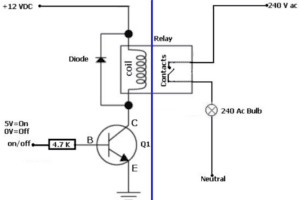
Relays: The Silent Workhorses of Industrial Automation
Some of the most important components in an industrial control panel are also the ones that receive the least attention. The relay is a perfect example. A relay doesn’t power the machine. It doesn’t run the PLC. It doesn’t display alarms or operator messages. Yet every day, it quietly switches loads, isolates control circuits, protects…

The Most Overlooked Component on Your Control Panel
When engineers design a control panel, they spend countless hours selecting the right PLC, power supply, terminal blocks, relays, and circuit protection. But one component often gets very little attention. The cable grip. Yet every cable entering your enclosure passes through one. A quality cable grip does much more than hold a cable in place….
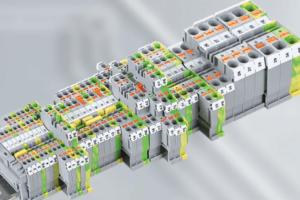
Why Push-In Terminal Blocks Continue to Gain Popularity
One of the biggest trends we’ve seen in recent years is the growing adoption of push-in terminal block technology. And honestly, it’s not difficult to understand why. Manufacturers, OEMs, and panel builders are under constant pressure to: ⚡ Reduce labor time ⚡ Increase consistency ⚡ Improve panel density ⚡ Simplify assembly ⚡ Reduce rework Connection…

The Hidden Cost of Oversized Components
One of the most valuable assets inside a control panel isn’t the PLC. It’s not the power supply. It’s not even the wire. It’s the space along the DIN rail. And that space is for sale. Every millimeter you consume has a cost. Yet many panel designs waste valuable DIN rail space by using components…
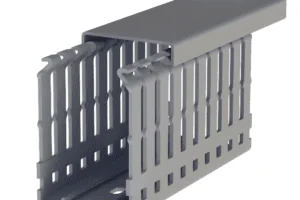
The Most Overlooked Productivity Tool in a Control Panel
When people think about improving panel-building efficiency, they usually focus on automation, wire processing equipment, or software. But one of the biggest productivity tools in a control panel is often overlooked: Wire duct. It doesn’t get much attention. Yet it impacts nearly every phase of a panel’s life. A well-organized panel with properly sized wire…

One of the Clear Winners at the Wire Processing Expo: The New LC 160 Automatic Wire Cutter
We had a great week at the Wire Processing Expo in Milwaukee with our partner GLW GmbH from Germany, and one thing became obvious very quickly: The new LC 160 drew a tremendous amount of attention. Why? Because it addresses one of the biggest challenges manufacturers and panel builders are facing right now: ⚡ Labor…
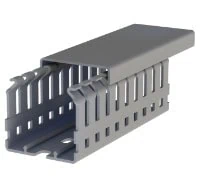
Why AEI Chose Klemsan Wire Duct and Why Our Customers Are Switching
Wire Duct isn’t glamorous but it’s one of those components that quietly determines how clean, serviceable, and efficient an electrical panel really is. At American Electrical, Inc., (AEI) we’re picky about who we represent and what we stock. If it doesn’t save time, money, or headaches, it doesn’t make the cut. That’s exactly why we…
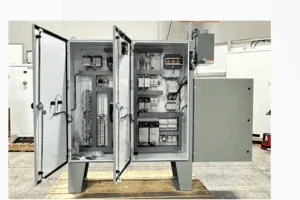
DIN Rail Density: Why Millimeters Matter More Than You Think
In control panel design, space is more than a convenience, it’s a constraint that affects accessibility, future expansion and more importantly, costs. Choosing compact DIN Rail mounted components can free up valuable rail space, improve airflow, and simplify wiring and servicing. A few millimeters saved on each device adds up quickly $$ in high-density panels…